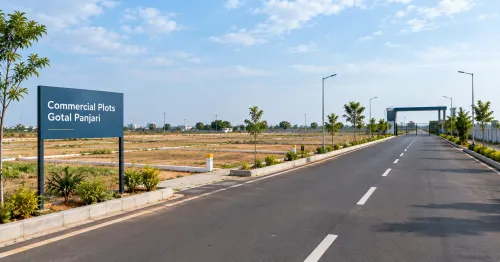

A plot that looks level and accessible in April can develop ponding, soft soil and an impassable approach road during Nagpur’s southwest monsoon. You will be able to inspect Anandam Elite Phase 9 and 10, verify drainage and legal records, and plan a future house around evidence rather than brochure claims.
Key takeaways
- Visit during heavy rain and photograph road access, ponding and drainage outlets.
- Trace storm-water flow uphill and downhill before selecting a plot.
- Verify layout approval, plot dimensions and buildability with official documents.
- Match the soil report, plinth height and house design to monsoon conditions.
Inspect the plot and approach road during heavy rain
A plot is monsoon-ready only if you can reach it safely and find no persistent ponding during or immediately after heavy rain. Visit between June and September, when Nagpur receives most of its annual rainfall, and record what you observe rather than relying on dry-season photographs.
- Measure standing-water depth at the plot, road and low points; note how long each pool remains after rain.
- Mark runoff direction, including water flowing across the internal road, and compare plot-to-plot level differences.
- Walk the site for muddy or softened soil, potholes, road-edge erosion and collapsed shoulders.
- Check whether culverts carry the flow, drains are blocked by leaves or silt, and the route reaches the nearest all-weather road.
- Ask neighbours where water collects, how long access is cut off, and whether the site flooded in previous seasons.
For Anandam Elite plots, monsoon conditions in Nagpur cannot be judged from paved internal roads alone. A smooth surface can still conceal a blocked culvert, an undersized outfall or water entering from higher plots.
The same inspection matters for residential plots in Dongargaon in Nagpur: photograph water levels, damaged edges and access conditions, then ask the seller to explain each defect in writing.
If the road becomes impassable, ponding lasts into the next day, or runoff crosses the plot without a functioning outlet, pause the purchase until the cause and remedy are demonstrated.
Trace every drop of storm water before choosing a plot
A drainage claim is credible only when you can trace water from the plot to a functioning outfall. Before you buy plot in Dongargaon, walk every boundary and mark roadside drains, storm-water channels, culverts, natural nalas, low points and the route water takes after leaving the internal road.
Check each discharge route for leaves, silt and construction debris. Ask for the approved storm-water plan, drain invert levels, outlet location, maintenance responsibility and confirmation that the outlet does not depend on an unbuilt road, private low-lying land or a nala that backs up during intense rain.
- Demand a topographic survey showing existing ground levels, approved road levels, proposed finished levels and the fall toward the outfall.
- Ask why a raised road or filled plot will not redirect runoff onto neighbouring land; a low plot can receive water from several adjoining plots.
- Compare the site plan with local observations, then ask the developer and planning authority about natural drainage paths, waterbody buffers, flood-prone depressions and restricted development areas.
Use this comparison while inspecting Anandam Elite Phase 9 and 10 separately:
| Evidence | What it confirms | Warning sign |
|---|---|---|
| Storm-water plan and outlet | Planned discharge route | No named outfall |
| Invert levels and survey | Drainage fall | Flat or reverse fall |
| Boundary walk | Actual channels and low points | Blocked culvert or nala |
| Maintenance undertaking | Who clears the system | No responsible party |
A paved internal road proves little if water has nowhere to go. Stop or renegotiate until the route, levels and maintenance duty are documented.
Verify that the advertised plot is approved and buildable
A brochure does not prove that a plot is approved or buildable. Match the plot number, area, four boundaries, survey or gut number, and subdivision across the sanctioned layout plan, current 7/12 extract, mutation entries, and property card where applicable; any mismatch requires an explanation before payment.
| Evidence | Proves | Does not prove |
|---|---|---|
| Sanctioned layout and development permission | Approved layout and construction route | Flood-safe ground |
| 7/12, mutation and property card | Recorded holder, area and land details | Clear title by themselves |
| Site levels, drainage plan and outfall | Physical monsoon resilience | Legal residential approval |
Request these records:
- Land title, encumbrance or title search, current 7/12 extract, mutation entries and property card where applicable.
- Development permission, sanctioned approach-road plan, and the applicable non-agricultural or land-use order.
- Phase-specific NOCs and written confirmation that the plot is not reserved for a road, open space, amenity, utility corridor or storm-water channel.
- For Anandam Elite Phase 9 and 10, verify each phase separately: boundary, internal-road width, drainage, utilities and completion status.
Search MahaRERA using the project name, promoter, location and phase. Compare approved plans, land details, completion date and complaints; if registration does not apply, require the seller’s written legal explanation. A plot advertised as plots for future home in Nagpur is not automatically releasable for construction.
Have a Maharashtra property lawyer review the records before paying the balance.
Match the soil test and house design to monsoon conditions
A dry-season walk cannot show filled-soil depth, weak subgrade, groundwater, or settlement risk where rainwater remains. Before fixing a foundation or house plan for plots for a future home in Nagpur, order a site-specific topographic survey and geotechnical investigation.
1. Request a survey showing existing ground, adjoining plot, road and drainage levels. Obtain a geotechnical report with bore-log, filled-soil depth, soil bearing capacity, groundwater observations and foundation-treatment advice. Apply the same checks to residential plots in Dongargaon, Nagpur.
2. Set the finished floor and plinth above the surveyed road and surrounding plot levels, not merely above today’s ground. Coordinate the raised plinth with a real outfall; raising it without one can trap water or divert runoff onto neighbours.
3. Include a damp-proof course, plinth protection, wall and roof waterproofing, and roof overhangs. Connect rainwater downpipes to controlled discharge or harvesting, grade paving away from walls, and place the sump, pump controls, meter board and other electrical equipment above likely water levels.
Price the hidden work before committing: soil filling, retaining edges, septic arrangements, a borewell, temporary access and rainwater management. These are planning requirements, not confirmed Anandam Elite features, until the seller supplies approved specifications and drawings. A test report is cheaper than repairing a settled, damp house.
Use a phase-specific checklist before you commit
Do not treat a booking receipt as a safe purchase decision. To buy a plot in Dongargaon, compare Phase 9 and 10 separately, using documents and a site visit during or immediately after rainfall.
| Criterion | Anandam Elite Phase 9 | Anandam Elite Phase 10 |
|---|---|---|
| Monsoon evidence | Date-stamped photographs; ponding depth, duration, runoff direction | Same observations, recorded separately |
| Levels | Surveyed plot, road and proposed finished levels | Surveyed plot, road and proposed finished levels |
| Drainage | Outlet location, invert levels and maintenance responsibility | Outlet location, invert levels and maintenance responsibility |
| Soil | Site-specific bore-log, bearing capacity and foundation advice | Site-specific bore-log, bearing capacity and foundation advice |
| Utilities | Commissioned water, electricity, sewerage or septic system | Commissioned water, electricity, sewerage or septic system |
| Access | All-weather approach and internal-road usability | All-weather approach and internal-road usability |
| Records | Sanctioned layout, phase boundary, plot number, area, survey/gut number, subdivision, four boundaries and legal access match | The same exact matches, verified independently |
Put the exact plot area, boundaries, phase and layout references, possession conditions, infrastructure deliverables, drainage obligations, completion deadline, charges, cancellation terms and remedies in the agreement. Break the total into plot price, stamp duty, registration, GST where applicable, development charges, maintenance and utility connections.
If evaluating Anandam Elite for plots monsoon in Nagpur through Bhumesh Realtors Nagpur, ask for phase-specific documents and a post-rain visit. Have a property lawyer compare every promise with sanctioned records. Reject or renegotiate when the outfall, legal access, construction release or road usability cannot be demonstrated.
Related product
 | Residential Plots ₹195000000 Anandam Elite Phase 9 and 10 is a residential plotting project in Dongargaon, Nagpur, near the Wardha Road corridor. View product → |
Frequently asked questions
When should you inspect a plot for monsoon readiness in Nagpur?
Visit between June and September, then inspect during heavy rain or immediately afterward. Record road access, standing water, runoff paths and drainage conditions.
How can you trace storm water before buying a plot?
Walk uphill and downhill from the plot, identify nearby low points and outlets, and check whether runoff enters the plot or remains trapped beside it.
What should you verify before buying a residential plot in Dongargaon?
Check the approved layout, exact plot number and dimensions, ownership documents, access-road status, sanctioned land use and whether the plot is legally buildable.
How should soil testing influence a monsoon-ready home design?
Use the soil report to guide foundation selection, plinth height, site grading, waterproofing and storm-water drainage for the proposed house.
Keywords